
🧠 Understanding Bleaching: Why Your Hair Base Decides Between Success and Frustration
Bright hair can be love at first sight 🌈 or a huge disappointment.
And very often, it’s not the color itself that’s to blame, but what happens before coloring: bleaching.
Patchy results, wrong shades, or colors that fade way too fast almost always have the same cause:
👉 an unsuitable or misjudged hair base.
In this article, we’ll explain in a clear and simple way why bleaching is so crucial, how to recognize yellow, orange, and red undertones, and which colors are especially demanding.
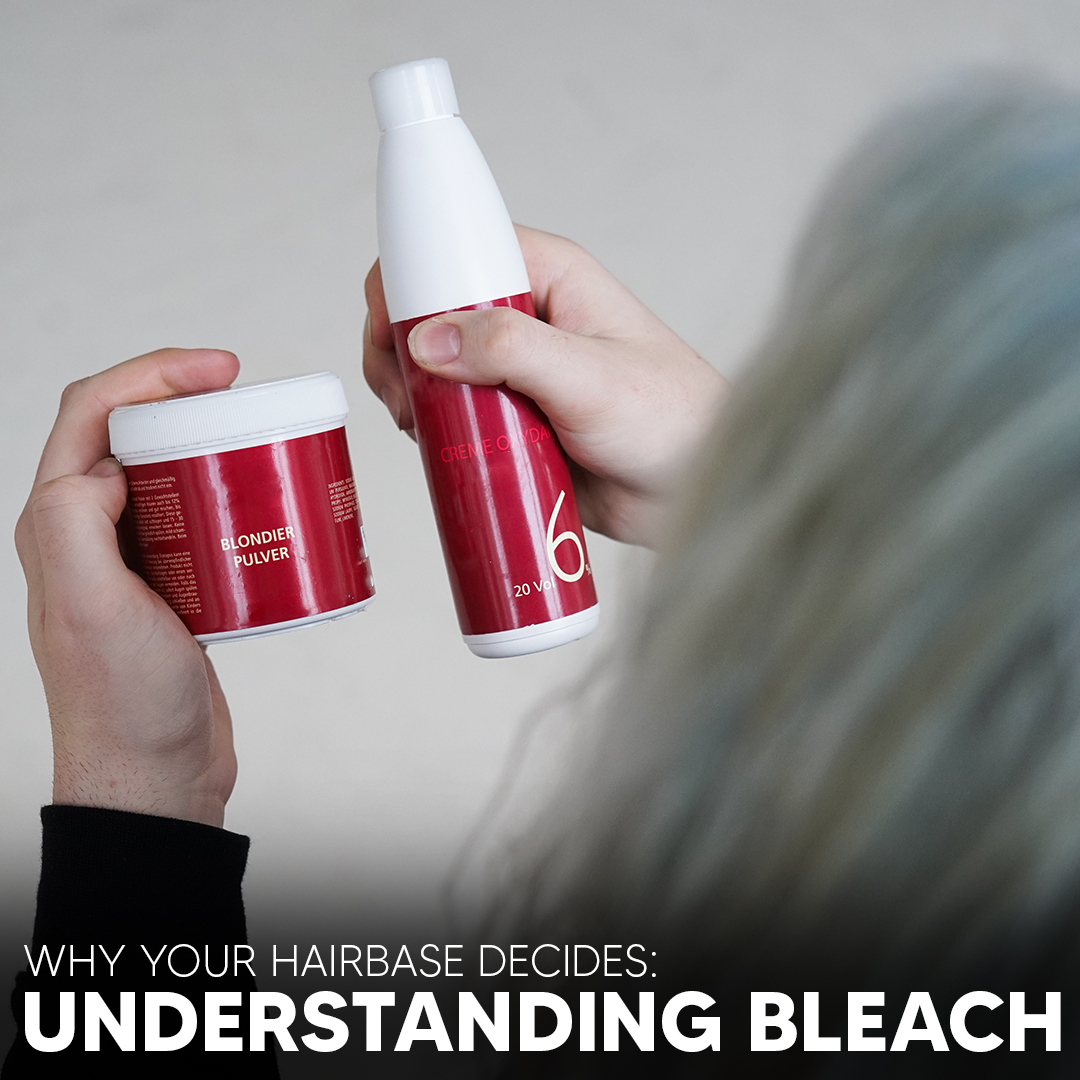
✨ Bleaching levels explained – what does “light enough” really mean?
“My hair is blonde!” is something we hear all the time.
The problem? Blonde is not just blonde.
For vibrant hair colors (and especially for pastel and grey shades) your hair needs to be extremely light, ideally white blonde.
The darker or warmer your blonde base is, the more it will influence the final color result.
👉 If you want to dive deeper, make sure to check out this article:
Which bleaching level is right for bright hair colors?
💛🧡❤️ Recognizing yellow, orange & red undertones – and why they matter
A slight yellow undertone may seem harmless in everyday life, but for bright colors, it’s anything but.
Yellow undertone → distorts pastels, blue & grey
Orange undertone → makes pink, red & purple look warmer or muddy
Red undertone → almost completely destroys cool shades
Whether an undertone is truly problematic depends heavily on the color you want to achieve.
When a yellow undertone is okay — and when it’s not — is explained in detail here:
Is a yellow undertone bad when dyeing your hair bright colors?
🤯 Why “light enough” isn’t always “right enough”
Two people can have hair that looks equally light, and still end up with completely different results.
The reason:
Not just brightness, but also the underlying pigments in the hair determine how a color will turn out.
That’s why the rule is:
✔ A clean, neutral base
❌ is always better than “almost light enough” with warm leftover pigments
Patience during bleaching really pays off later 💪✨
🎨 When pastel & grey shades work — and when they don’t
Pastel and grey tones are stunning, but let’s be honest: they’re real divas 😅
They forgive very little and require an almost perfect base.
They work best if:
your hair is white blonde
no warm undertones are visible
there are no silicone or styling residues in your hair
Better suited for less-than-perfect bases are:
bold pink, red, or berry tones
darker shades
colors that are meant to look warm
If you want to color your hair without bleaching at all, you’ll find suitable options here:
Bright hair without bleaching – these Headshot colors work on natural hair
💡 The base always decides
Even the most beautiful color in the world can only look as good as the hair base beneath it.
Understanding bleaching saves you frustration, time, and unnecessary recoloring and gives you the exact look you’re dreaming of 💖
So take a little extra time for preparation — your color result will thank you for it.
📲 Social Media Teaser
Instagram / Facebook:
Bright hair disappointing? 👀 Often it’s not the color — it’s the bleaching!
Why your hair base decides between success and frustration in our new blog post 🧠✨🌈
Short version:
Why bleaching is just as important as the color itself 🌈🧠 Now on the blog!